
Downtime gets talked about like it’s inevitable. A breakdown happens, production stops, and the clock starts ticking. However, this only covers half of the story.
What really matters isn’t just how long something is down, it’s how that downtime is handled because the difference between removing a component for repair and restoring it in place can be the difference between days and weeks of lost output.
That’s where on-site machining services change the equation, not by avoiding failure, but by effectively controlling what happens next.
Contents
What does downtime actually cost?
Downtime is usually treated as a number. A line on a report. Hours lost, maybe days. But when it’s framed in this way, it misses the point.
In reality, downtime behaves more like a ripple than a fixed cost. One failure spreads into everything else. Production stops, schedules shift, people wait, and commitments start slipping. The longer it runs, the harder it becomes to contain. It’s starting to sound serious now, right?
A damaged crankshaft or worn journal isn’t just a maintenance issue. It interrupts output, delays downstream processes, and puts pressure on teams that have nothing to do with the original fault.
Most businesses will calculate the obvious impact. Fewer take into account the secondary effects; things like the extended recommissioning time, the strain on equipment that’s waiting to restart, or the reputational cost of missed deadlines.
That’s where downtime becomes expensive in ways that don’t show up immediately.
Why traditional repair methods fall short
The conventional approach hasn’t really changed in decades.
Remove the component,
send it away,
wait for it to be repaired,
reinstall it,
and bring everything back online.
On paper, it works. In practice, it introduces delays at every stage.
Large components aren’t built to be moved easily. Removing them takes time, and transport introduces risk. Reinstallation requires alignment, testing, and often further adjustment. Even something relatively straightforward like shaft journal repair can turn into a drawn-out process once logistics get involved.
And the problem is, none of that time is productive. It’s waiting time.
For industries like marine, power generation, or heavy engineering, that waiting period is often the most expensive part of the entire job.
What on-site machining services really change
This is where on-site machining services bring a new scenario.
Instead of removing the problem, the solution is brought to it.
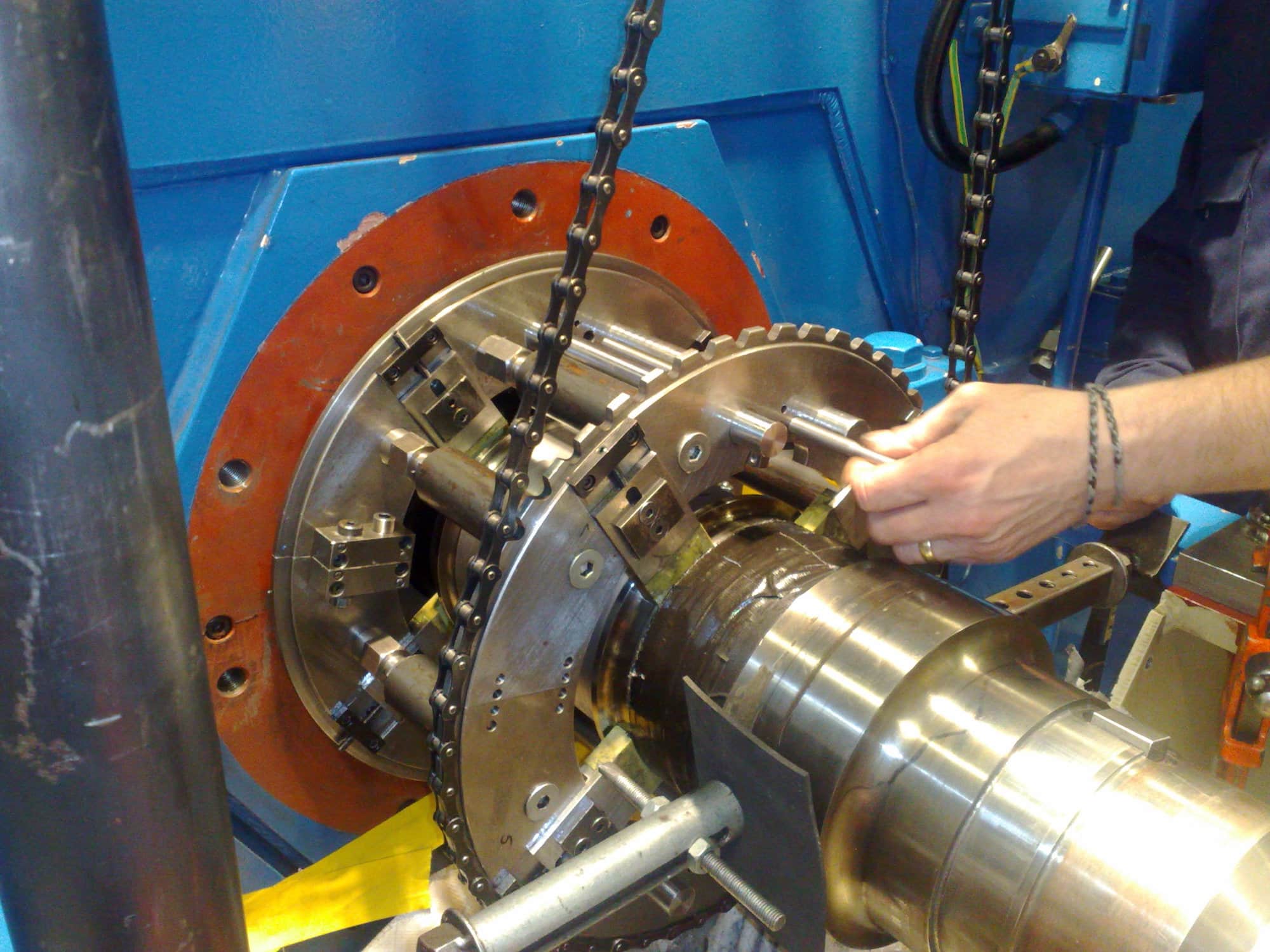
That sounds simple, but the impact is substantial. By eliminating transport and reducing disassembly, you remove some of the biggest sources of delay. The work is done where the component sits, within its operating environment, and often without a full strip-down.
Processes such as on-site line boring, on-site flange facing, and portable milling allow engineers to restore critical surfaces without disrupting the wider system more than necessary.
There’s also a subtle but important benefit here. Because the component remains in place, alignment can be maintained relative to the rest of the machinery. That reduces the risk of introducing new issues during reinstallation; this is definitely something that’s regularly overlooked… until it becomes a problem, of course!
Repair vs recovery
There’s a difference between fixing something and getting a business moving again.
Repair focuses on the component. Recovery focuses on the operation.
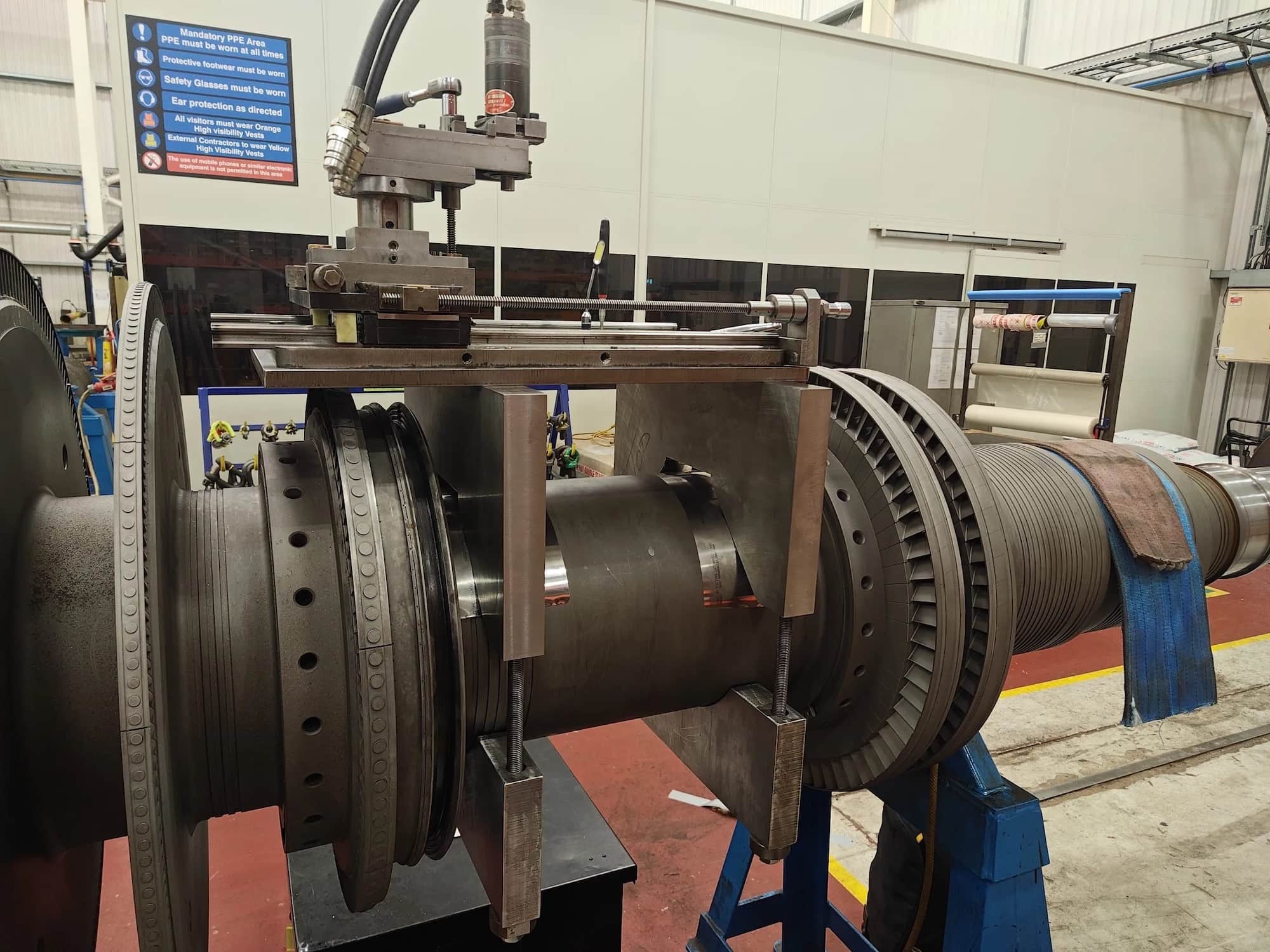
For example, take in-situ crankshaft grinding. The traditional route involves removal, transport, machining in a workshop, and reinstallation. It’s thorough, but it’s undeniably slow.
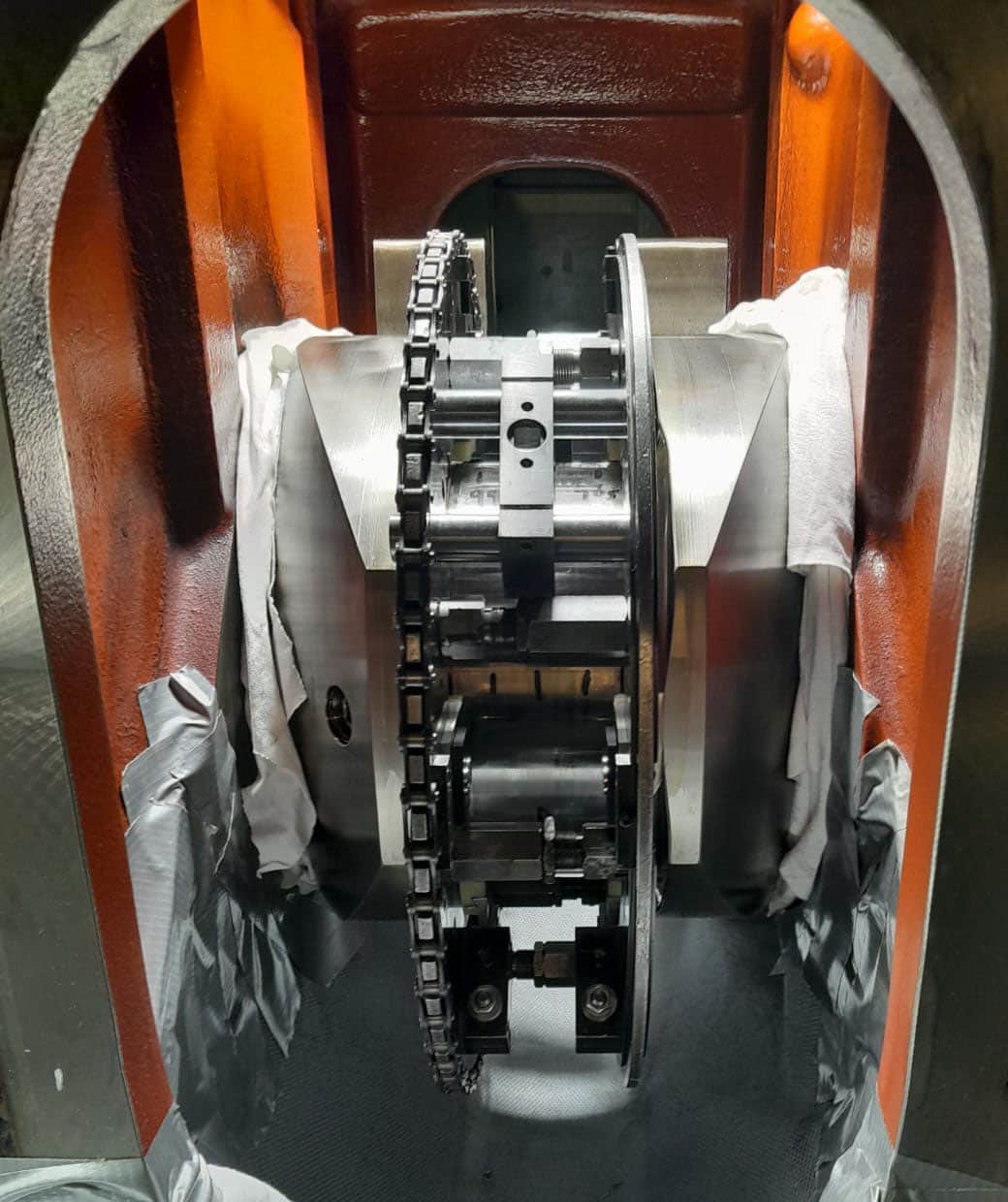
On the other hand, an in-situ crankshaft repair approach works differently. The machining is carried out within the engine, maintaining the original alignment and avoiding the need for full disassembly. The result is a faster return to service due to a more quickly repaired component.
That distinction matters. Because, in most real-world situations, the priority isn’t perfection in isolation. It’s restoring function without introducing further delay.
Real-world applications
Different industries approach downtime differently, but the underlying pressures are consistent.
In marine environments, the challenge is often access and time. On-site crankpin machining, tailshaft repair & machining, and liner landing machining are carried out because removing those components isn’t practical within the available window.
In power generation, the focus shifts slightly. The cost of downtime is measured directly in lost output. Services such as power generation, machining, and broader in-situ engineering work are used to minimise that loss and maintain continuity.
Oil and gas environments bring another layer of complexity. Shutdowns are tightly controlled, and missing a window can quickly escalate costs. That’s where on-site machining for oil & gas, on-site petrochemical machining, and flange repair & machining become essential rather than optional.
In heavy industry and mining, scale is the dominant factor. Components are often too large or too deeply integrated into the system to be removed easily. Work such as bedplate repair services or diesel engine line boring is carried out in place because there isn’t a viable alternative.
Where in-situ machining offers ROI
There’s a tendency to view in-situ machining as a specialist option, but in many cases it’s simply the more practical one.
When equipment is large, fixed, or alignment-sensitive, removing it creates more problems than it solves. The time spent dismantling, transporting, and reinstalling quickly outweighs the benefits of working in a workshop.
By contrast, on-site precision machining reduces those variables. The work is carried out in context, downtime is compressed, and the system can often be brought back online more quickly and with fewer unknowns.
That said, it isn’t always the right approach. Smaller components, or those requiring highly specialised workshop processes, may still be better handled off-site.
But when downtime is imperative, and the equipment is integral to operations, the balance shifts very quickly.
Capability counts more than the method
One thing that’s often underestimated is the level of skill required to carry out this work properly.
Working on-site means dealing with real conditions, not controlled environments. Space is limited, access can be difficult, and tolerances must still be met.
That’s why experience in areas like metal stitching repair, cast iron crack repair, and in-situ thread restoration services is so important. It’s not just about having the equipment. It’s about knowing how to apply it under pressure.
Because when you’re working on critical infrastructure, there isn’t much room for error.
FAQs
What is on-site machining?
On-site machining is the process of performing machining operations directly on installed equipment, without removing it from its location.
When is in-situ machining the right choice?
It’s typically used when removing a component would cause excessive downtime, cost, or risk.
Is on-site machining accurate?
Yes. With the right equipment and expertise, on-site precision machining can achieve tolerances comparable to workshop machining.
What types of work can be done in situ?
Common examples include in-situ crankshaft repair, on-site line boring services, flange repair & machining, and shaft journal repair.
How much downtime can it save?
In many cases, downtime can be reduced from weeks to days, depending on the repair’s complexity.
Not all downtime is equal
Some downtime is unavoidable, but some of it is extended unnecessarily by the way problems are approached.
That’s the shift in on-site machining services brings. Not just fixing components but changing how quickly and effectively operations recover.
And for businesses operating under pressure, that difference is often what matters most.
We’re here to help. Contact our team at Royce On-site Machining for more information on how we can support you.