
In-Situ Crankpin Machining & Geometry Restoration
Wärtsilä 6L20 – 6 Crankpins | 0.5 mm Machining & Superfinishing
Client – Confidential
Industry – Marine & Shipping
Location – France
Duration – 48 Hours
Overview
A marine vessel operating in France required urgent crankpin journal restoration to avoid extended downtime and maintain engine reliability. Royce Onsite Machining was mobilised to perform in-situ machining, removing 0.5 mm of material and restoring geometry across six crankpins onboard the vessel.
The works were completed within a strict 48-hour operational window, eliminating the need for crankshaft removal or workshop intervention.
Challenge
Inspection identified multiple issues impacting engine performance:
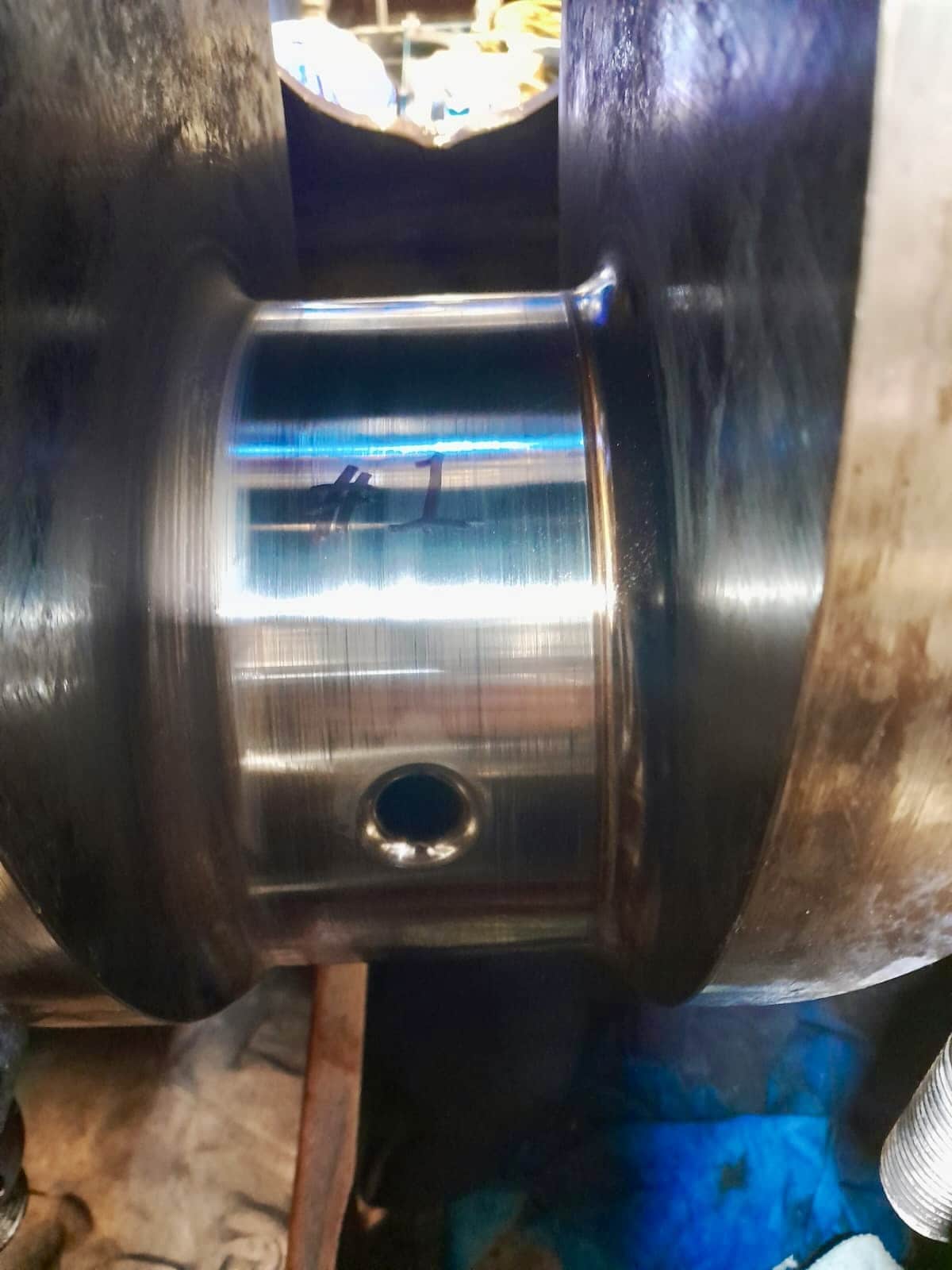
- Light scoring and surface wear on crankpin journals
- Geometric deviation affecting bearing alignment
- Degraded surface finish reducing bearing efficiency
- Severe time constraints due to vessel operational schedule
Traditional offsite repair methods would have required dismantling, transport, and extended downtime, significantly increasing cost and operational disruption.
Solution & Methodology
- In-Situ Inspection & Measurement
- Full crankpin inspection carried out onboard
- Precision metrology used to assess wear and geometry
- Baseline measurements established for machining control
- Precision Machining & Geometry Restoration
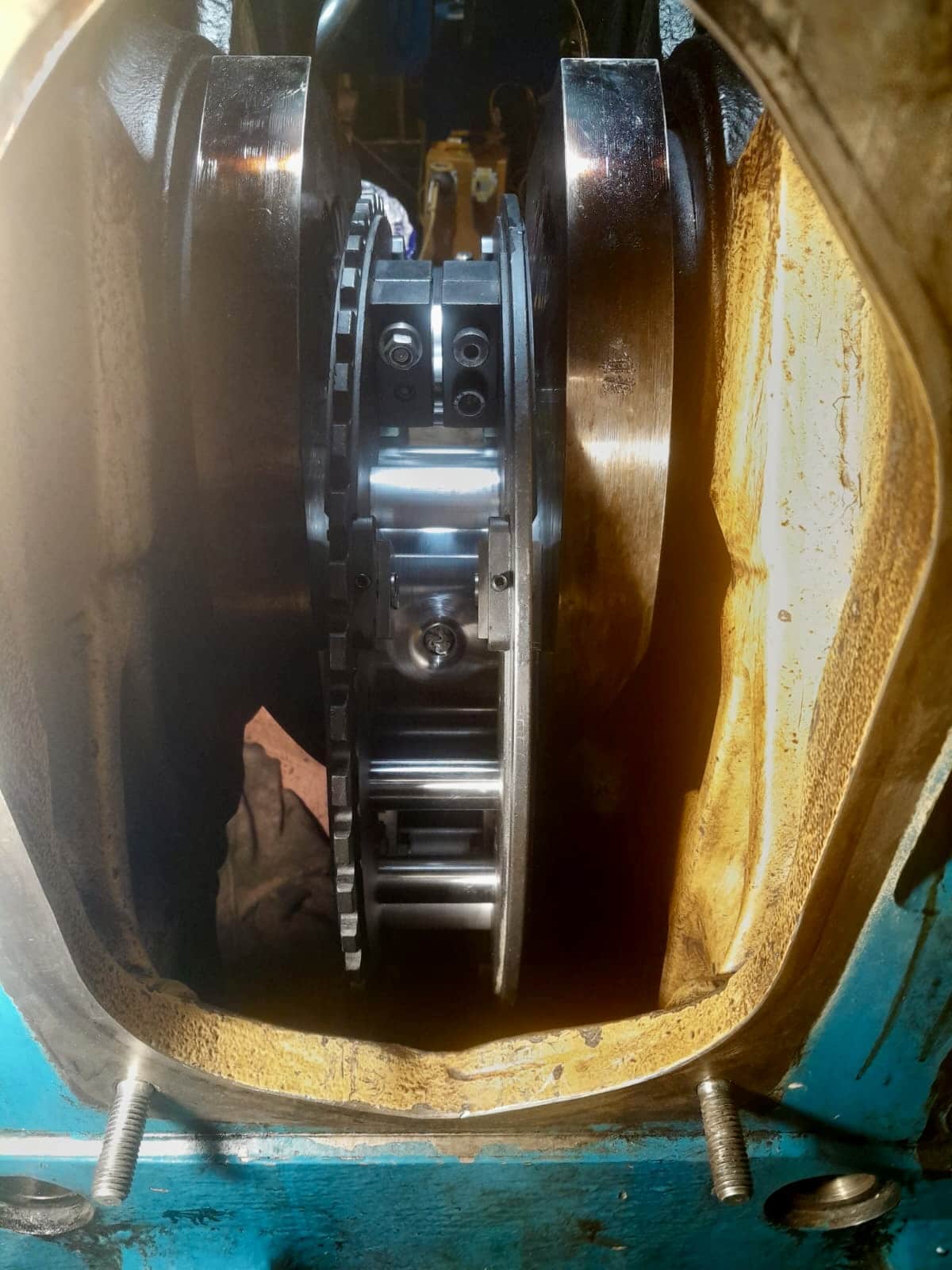
- Controlled in-situ machining with 0.5 mm material removal
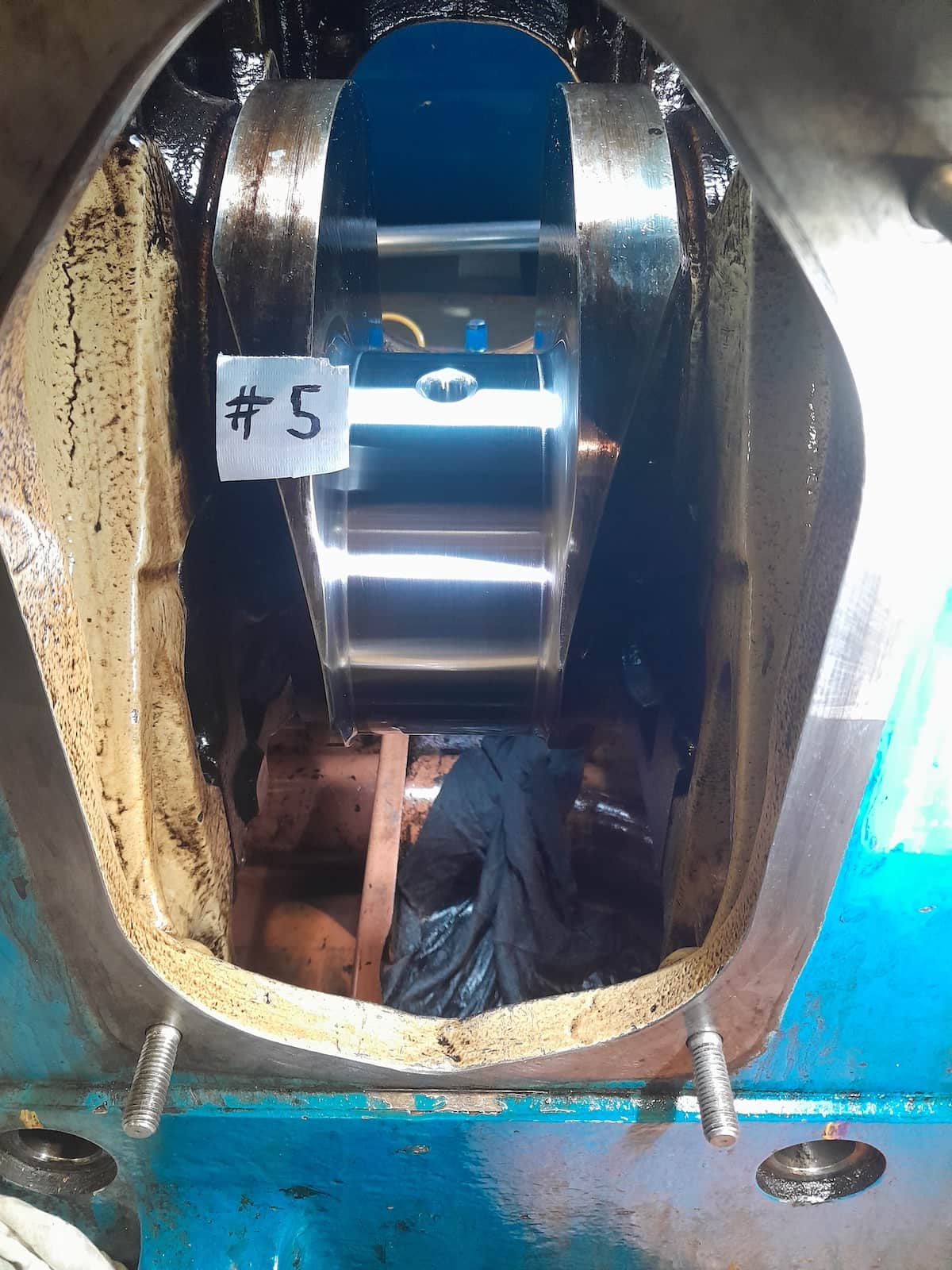
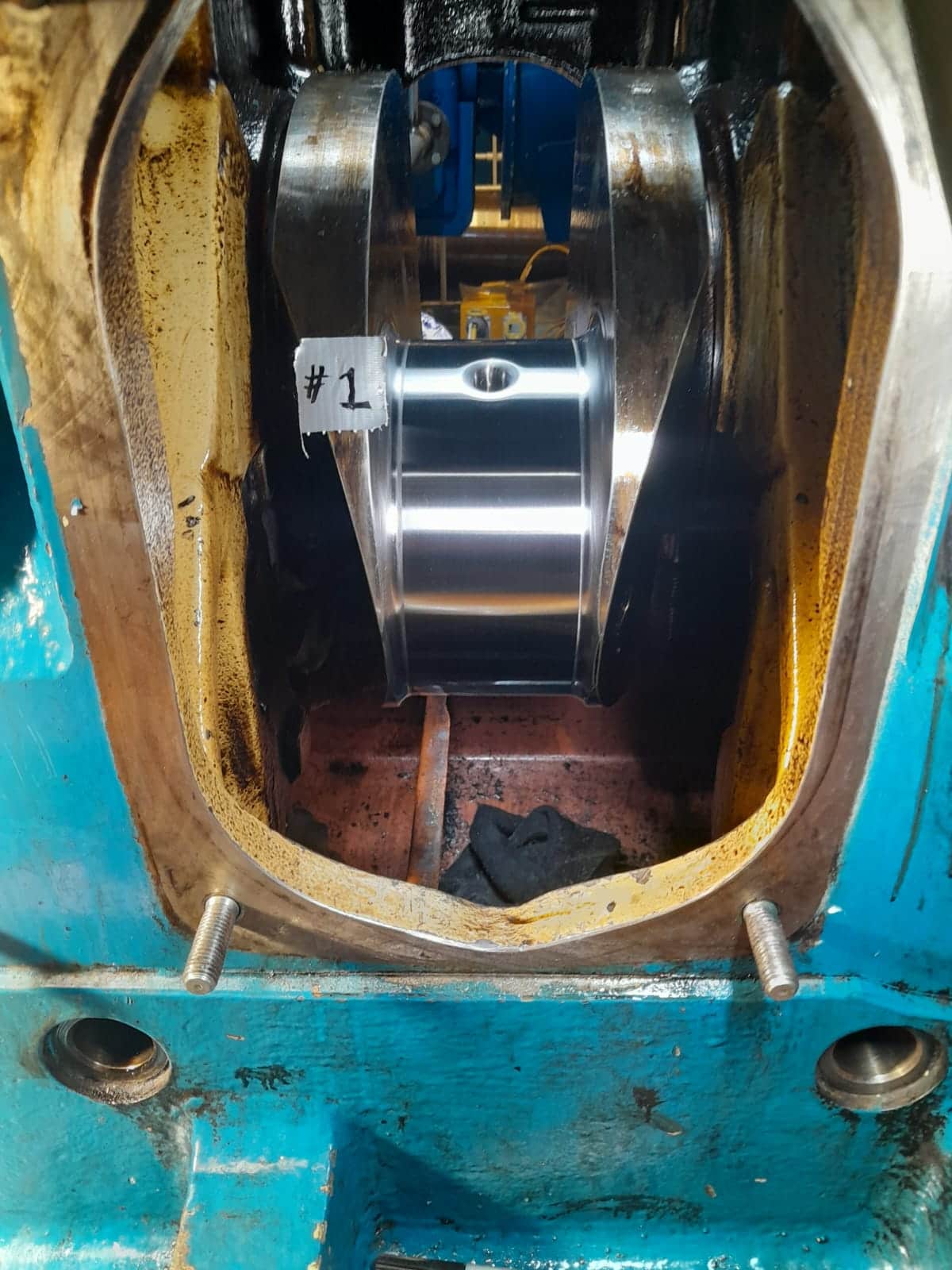
- Restoration of correct journal geometry and alignment
- Tight tolerance control maintained throughout process
- Honing & Superfinishing
- Precision honing applied to refine surface structure
- Superfinishing process delivered ultra-low surface roughness
- Improved lubrication characteristics and reduced friction
- Final Inspection & Verification
- Dimensional verification against engineering specifications
- Surface finish validation completed
- Crankpins approved for immediate return to service
Technical Summary
- Engine: Wärtsilä 6L20 (6 crankpins)
- Service: In-situ crankpin machining, honing & superfinishing
- Material removal: 0.5 mm
- Duration: 48 hours
- Method: Onboard machining without dismantling
Outcome
The restoration was completed successfully within the 48-hour shutdown window. All six crankpins were returned to service with restored geometry, improved surface integrity, and enhanced lubrication performance.
Key results included:
- Eliminated need for crankshaft removal
- Reduced operational downtime and cost
- Restored bearing alignment and journal geometry
- Improved friction characteristics and reliability
Conclusion
This project demonstrates the capability of rapid-response in-situ crankshaft machining and restoration in time-critical marine environments, providing a high-precision alternative to traditional workshop-based repair methods.