Onsite Historic Crankpin Machining on Train Wheel
Client: Locomotive Company
Industry: Rail & Locomotive
Location: UK
Service: In-Situ Crankpin Machining
Project Duration: 2 Days
Project Overview
Royce Onsite Machining was contracted by a local locomotive company to carry out a critical in-situ crankpin machining operation on a historic locomotive train wheel.
The two crankpins had not suffered a sudden failure or major mechanical breakdown. Instead, the crankpin surfaces had experienced wear through normal service use, resulting in the need for precision machining to restore the required dimensions, geometry and surface condition.
Due to the historic nature of the locomotive and the size and weight of the wheel assembly, removing the component for conventional workshop machining would have created significant logistical challenges. An in-situ machining solution allowed the work to be completed directly on the locomotive, helping to preserve the original component while minimising unnecessary dismantling.
Royce’s engineers precision machined both crankpins, removing 1 mm from each pin, while also carrying out the required radius machining to restore the correct profile and geometry.
The Challenge
Historic locomotive components present a number of unique machining challenges. Original components can be large, difficult to remove and expensive or impractical to replace.
In this application, the two crankpins had experienced gradual wear through service rather than catastrophic failure. The objective was therefore to accurately machine the existing crankpins while maintaining the integrity and historical value of the locomotive wheel assembly.
The repair required:
- Assessment of the existing crankpin condition.
- Measurement of the worn crankpin surfaces.
- Accurate setup of specialist in-situ machining equipment.
- Controlled removal of worn material.
- Removal of 1 mm from each crankpin.
- Machining of both crankpins to restore the required geometry.
- Radius machining to restore the required crankpin profile.
- Achievement of the required dimensions and surface finish.
- Final dimensional inspection and verification.
- Completion within the required two-day timeframe.
Work Carried Out
1. Initial Inspection and Assessment
Royce engineers inspected the locomotive wheel and crankpin assembly to establish the condition of both crankpins and determine the extent of service wear.
Detailed measurements were taken to establish the existing crankpin dimensions and identify the areas requiring machining.
The assessment allowed the machining process to be planned around the condition of the original components while ensuring that only the necessary amount of material was removed.
2. In-Situ Machining Setup
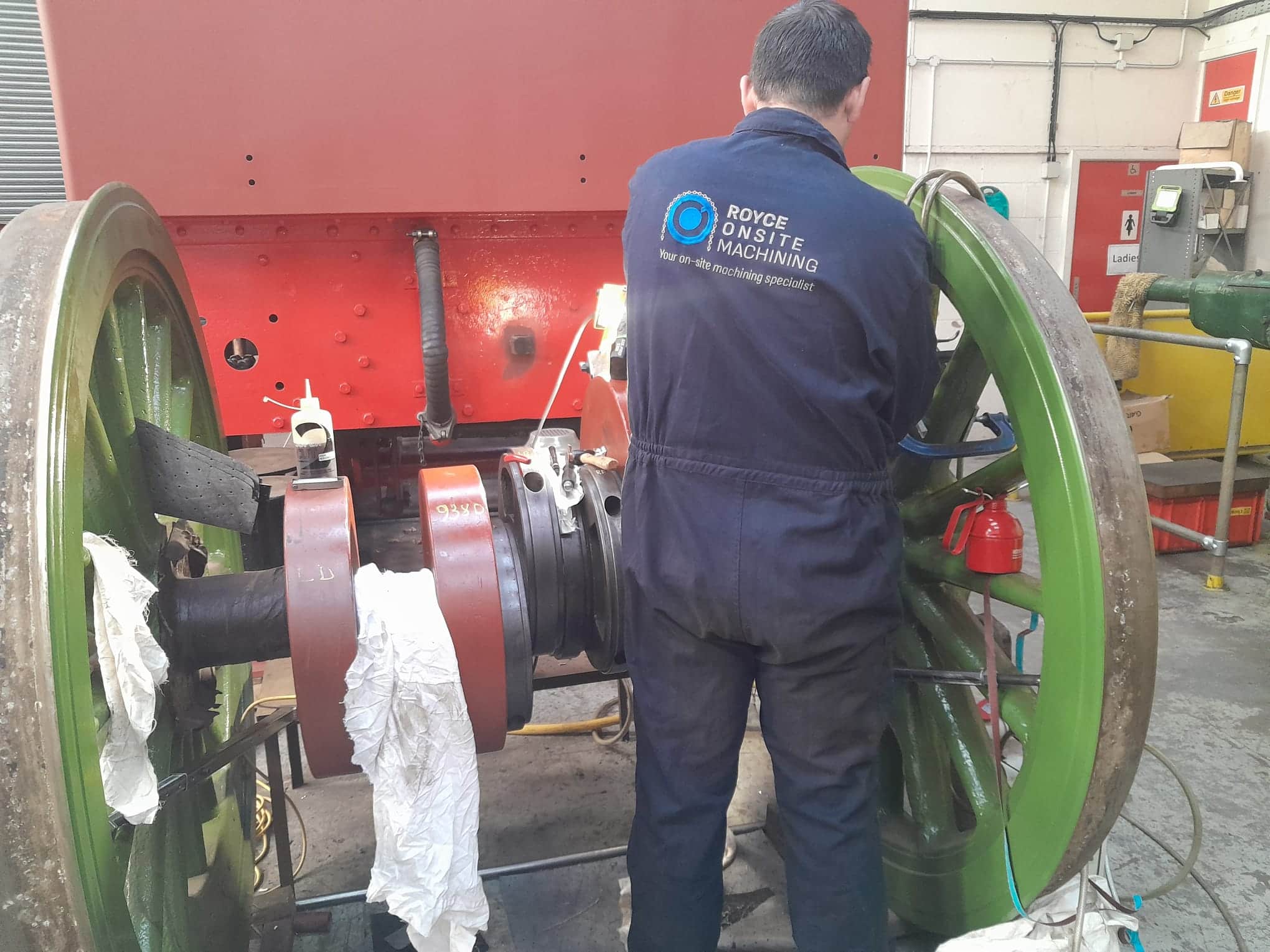
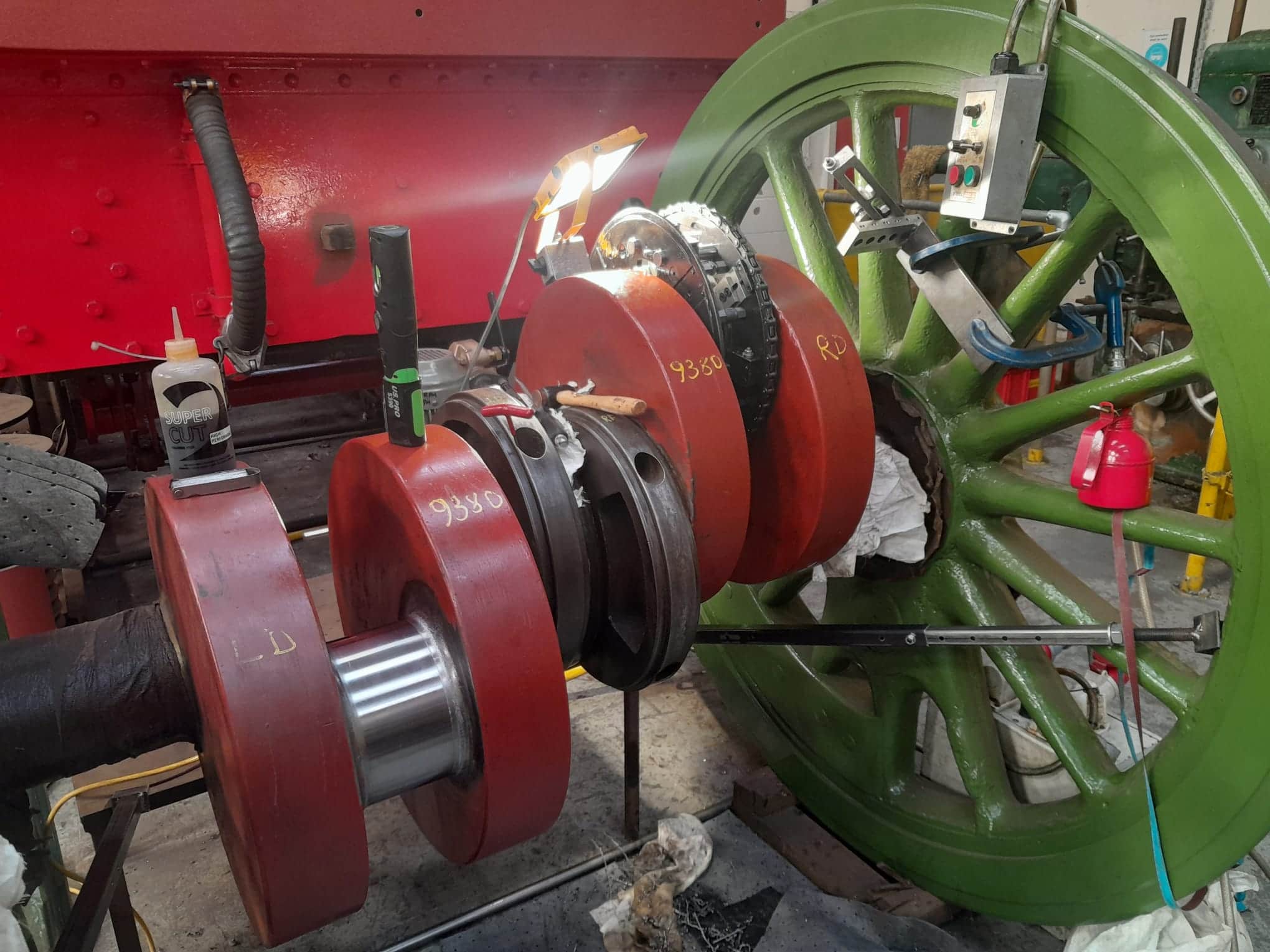
Specialist in-situ machining equipment was installed and accurately aligned with the crankpins.
The setup was carefully controlled to ensure that the machining equipment followed the correct crankpin geometry and maintained the required alignment throughout the operation.
This allowed both crankpins to be machined without removing the historic wheel assembly from its location.
3. Crankpin Machining
The worn surfaces of both crankpins were precision machined onsite.
A total of 1 mm was removed from each crankpin to eliminate the effects of service wear and restore the required dimensional condition.
Controlled material removal restored the cylindrical geometry of the crankpins while maintaining the integrity of the original locomotive wheel assembly.
4. Radius Machining
In addition to the main crankpin machining, the required radius machining was carried out to restore the correct profile and geometry of the crankpins.
The radius areas were carefully machined to achieve the required form while maintaining dimensional accuracy and the overall integrity of the original components.
5. Final Inspection and Verification
Following machining, both crankpins were inspected and measured to confirm the final dimensions, geometry and surface condition.
Final checks verified that the machined crankpins met the required dimensional tolerances and were suitable for their intended application.
The Result
The crankpin machining was successfully completed in-situ within two days, avoiding the need to remove the historic train wheel assembly for workshop machining.
Both crankpins were precision machined, with 1 mm removed from each pin to eliminate the effects of service wear and restore the required dimensions.
The required radius machining was also completed to restore the crankpin profiles and geometry.
Final inspection and dimensional checks confirmed the machined crankpins met the required specifications and were suitable for their intended application.
By completing the work onsite, Royce Onsite Machining helped minimise dismantling and handling requirements while providing a practical precision machining solution for a historic locomotive component.
The project demonstrates Royce Onsite Machining’s ability to carry out precision in-situ crankpin and radius machining on historic railway components, where dimensional accuracy, controlled material removal and preservation of the original equipment are essential.
Why Choose In-Situ Crankpin Machining?
Crankpins are critical components within locomotive wheel assemblies and can experience gradual wear during service. In-situ machining provides a method of restoring worn crankpins without necessarily removing the wheel or transporting large assemblies to a workshop.
For historic locomotives, this can be particularly valuable where original components need to be retained and unnecessary dismantling should be avoided.
Royce Onsite Machining can provide specialist in-situ machining solutions for:
- Crankpins
- Locomotive wheels
- Railway components
- Large shafts
- Bearing journals
- Worn cylindrical surfaces
- Radius machining
- Historic and specialist machinery
By machining components in their existing location, customers can reduce the logistical challenges associated with component removal and transportation.
Precision Machining for Historic Locomotives
Historic railway equipment often requires specialist machining techniques that combine precision engineering with careful consideration of the original component.
This project demonstrates Royce Onsite Machining’s ability to undertake in-situ crankpin and radius machining on historic locomotive equipment, restoring service-worn components while avoiding unnecessary removal of the original wheel assembly.
For enquiries about in-situ crankpin machining, radius machining or specialist onsite machining for railway and locomotive components, contact Royce Onsite Machining to discuss your requirements.