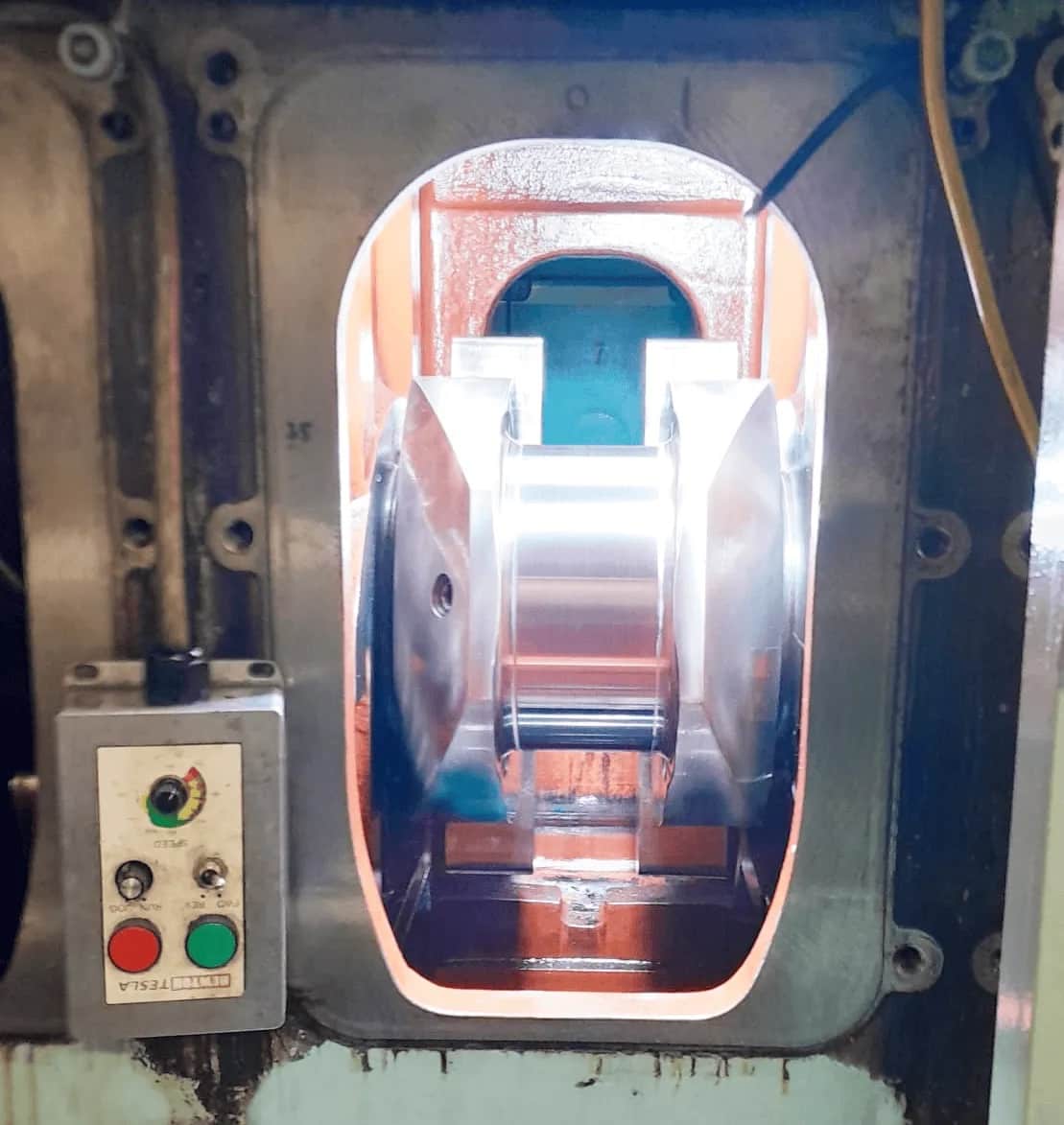

When a crankshaft or crankpin fails or shows signs of serious wear, the first question is almost never about repair method. The first question is about time. How long is this going to take, and what is the cost of every day the engine is not running?
In-situ crankshaft and crankpin repair often offers the fastest route back to operation — with no engine removal, no crankshaft extraction, and no workshop queue. However, it is not always a viable option. Attempting an in-situ repair on a crankshaft that exceeds the limits of what can be safely repaired may create a much larger problem than the one it was intended to solve.
We’ll dive into the factors that determine whether crankshaft or crankpin repair can be carried out in-situ, what the limiting conditions are, and what a realistic assessment and turnaround looks like when the answer is yes.
What In-Situ Crankshaft and Crankpin Repair Involves
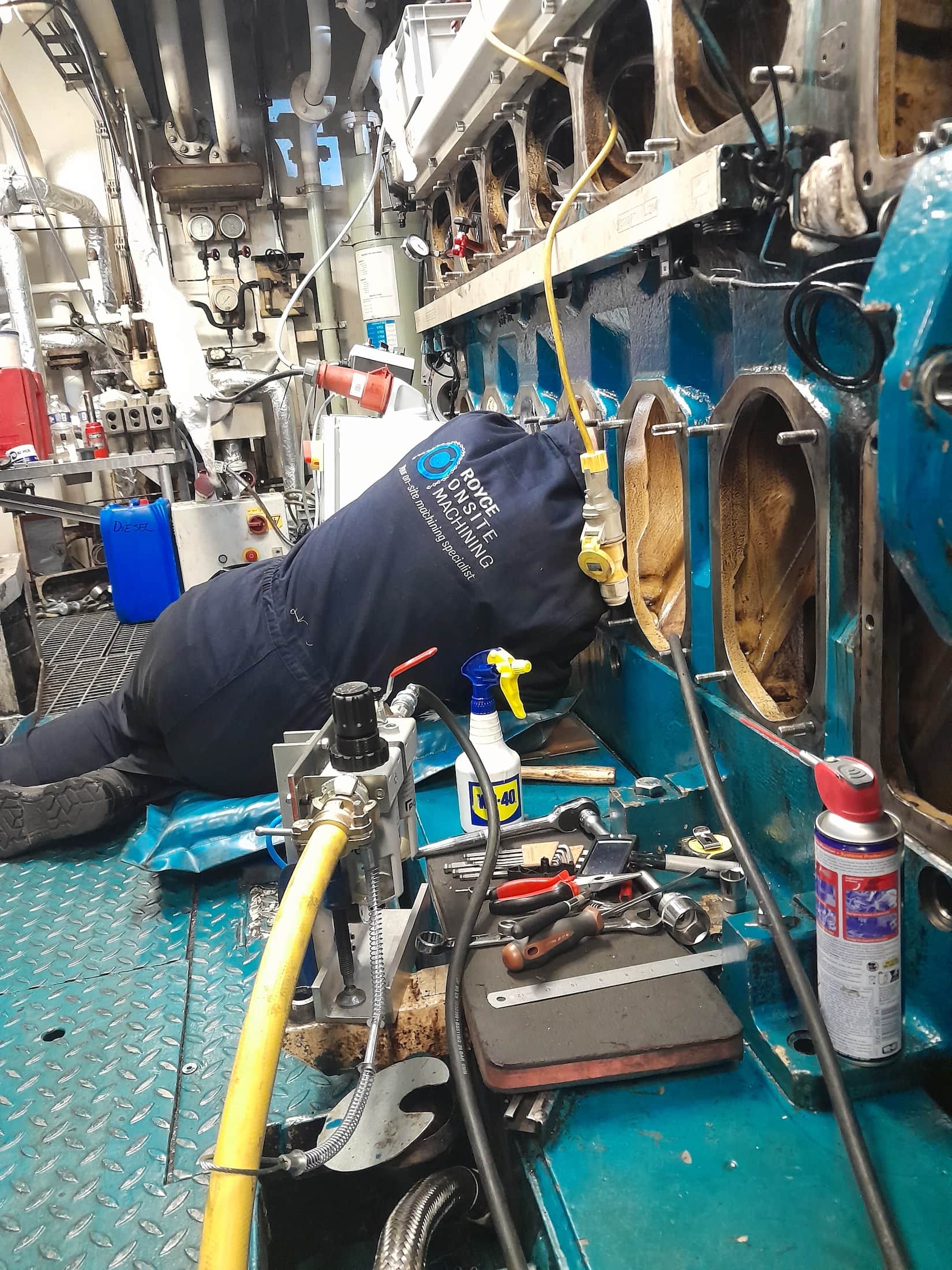
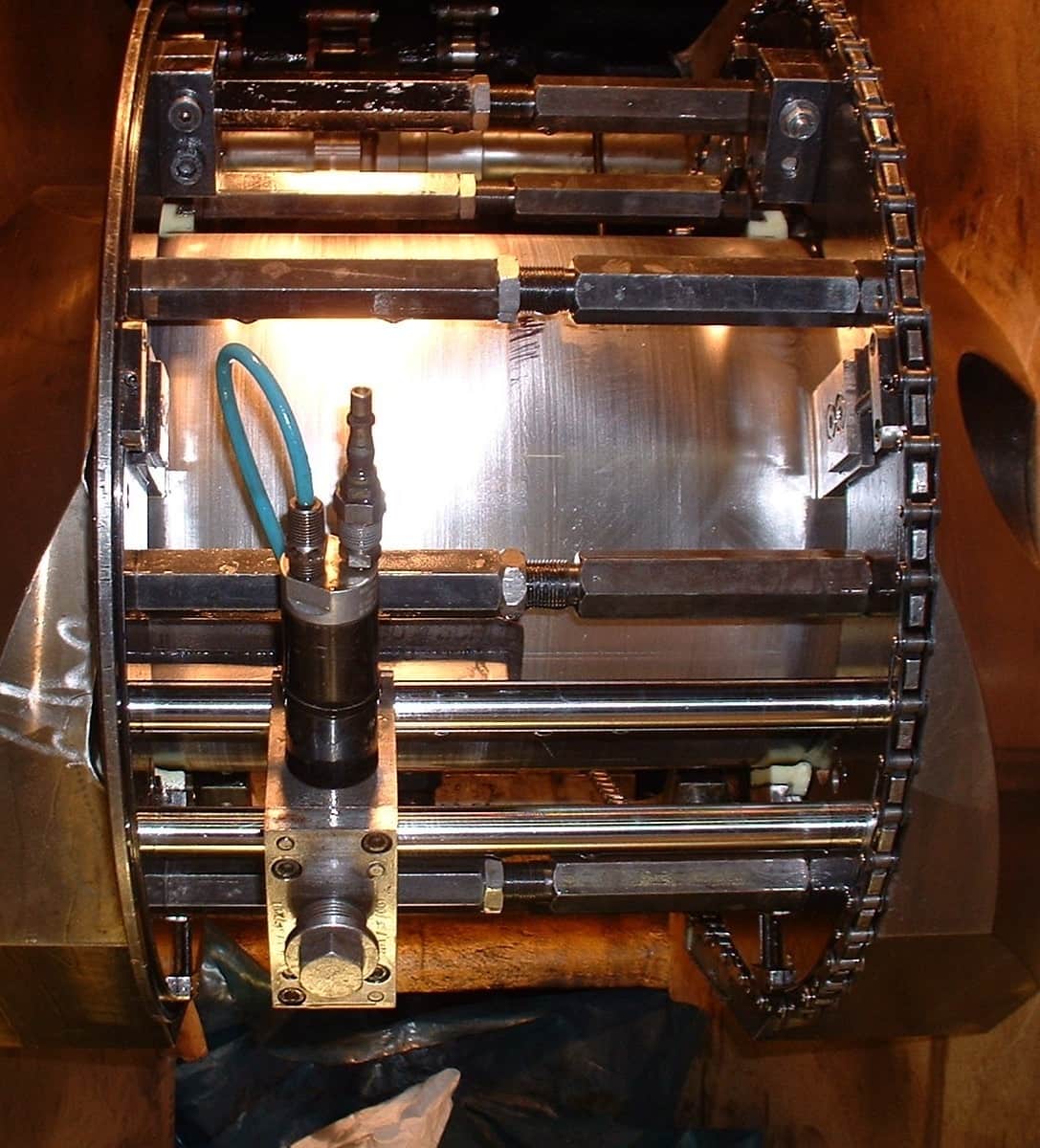
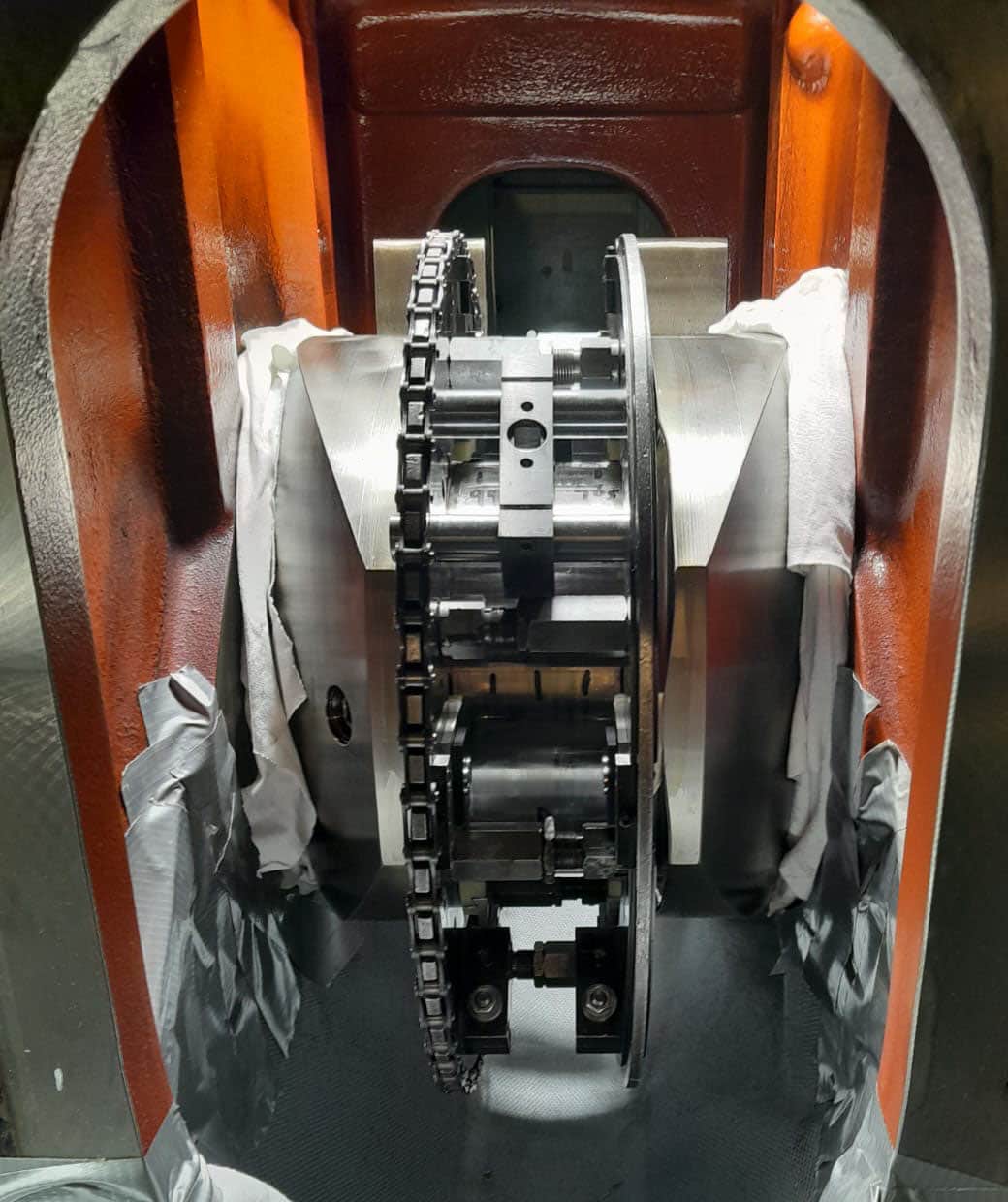
An in-situ crankpin repair involves restoring the geometry and surface finish of a crankpin — the journal on which the connecting rod bearing rides — without removing the crankshaft from the engine. Portable grinding and crankpin machining equipment is rigged directly to the crankshaft assembly within the engine space, and the crankpin is ground to a specified undersize to remove wear, scoring, or surface damage.
In-situ crankshaft grinding follows the same principle but typically refers to work on the main bearing journals rather than the crankpins, or to a combined programme covering both. The practical distinction matters because access requirements differ; crankpin work requires the ability to position grinding equipment around individual throws, while main journal work requires positioning along the main bearing line.
The objective in both cases is the same: restore the journal to a geometric tolerance and surface finish that allows a correctly sized bearing to run within the manufacturer’s operational parameters. The finished result, when carried out by engineers with the correct equipment and experience, is the same in accuracy as workshop grinding. What differs is the logistics — and in the context of a vessel in dry dock or a generator in a power station, the logistics difference is measured in weeks.
When In-Situ Repair Is Viable
The decision comes down to five factors. If all five are within acceptable limits, in-situ repair is the right route. If any one of them falls outside those limits, the picture changes.
1. The extent of wear or damage is within undersize limits
Every crankshaft has a manufacturer-specified minimum journal diameter below which the component must not be operated. Grinding a crankpin in-situ reduces the journal diameter by a small but finite amount, typically in increments of 0.25mm, and a bearing of the corresponding undersize is then fitted.
Most crankshafts allow for several undersize grinding stages over their service life, commonly to -0.25mm, -0.50mm, -0.75mm, and -1.00mm. If the journal has not previously been ground, or has been ground only to the first undersize, there is usually sufficient material remaining to allow in-situ work. If the journal is already at the last permitted undersize, or if the damage has removed material beyond the undersize limit, in-situ grinding is not the answer.
The assessment always starts here. Royce engineers measure the journal to establish current diameter, roundness, and taper before any recommendation is made.
2. The damage is limited to surface wear and scoring
Scoring, corrosion pitting, and circumferential wear are all addressable through in-situ grinding provided they do not extend beyond the undersize limits above. These are the most common forms of crankpin failure, and they respond well to in-situ treatment.
Cracking is a different matter entirely. Surface cracks in the journal fillet area, cracks in the web, or evidence of fatigue propagation are not conditions that in-situ grinding can resolve. These indicate a structural issue that requires workshop assessment, magnetic particle inspection, and in most cases crankshaft replacement. Attempting to grind over surface cracking masks the problem rather than solving it.
3. Physical access around the crankshaft is sufficient for the equipment
Portable crankpin grinding equipment is compact by design, but it still requires clearance around each throw to be mounted and operated. Engine spaces vary considerably in their accessibility, and the geometry of some engines, particularly older, short-stroke designs, can make crankpin access challenging.
This is one reason an experienced assessment is more valuable than a remote decision. Engineers who have worked across a wide range of engine types develop an understanding of access constraints that cannot be determined from a specification sheet alone. Royce has worked on marine diesels, power generation engines, and industrial prime movers across a broad range of designs, and access assessment is part of every pre-mobilisation review.
4. The crankshaft material is suitable for in-situ grinding
Most crankshafts used in marine and heavy industrial applications are manufactured from forged carbon steel or alloy steel, and these respond well to in-situ grinding. Case-hardened or nitrided journals require slightly different considerations but can generally be addressed in-situ provided the hardening depth is not breached during the grinding process.
Crankshafts manufactured from nodular iron or other materials that are susceptible to cracking under the heat or mechanical stress of grinding are treated more cautiously. Material type should be confirmed before work begins.
5. The programme timeline allows for it
In-situ crankpin repair is faster than the alternative in most scenarios, but it is not instantaneous. A single crankpin assessment and grind on a medium-bore marine diesel, with bearing trial and sign-off, is typically a multi-day programme depending on the degree of damage, the number of affected throws, and any heat treatment requirements. Crankpin annealing prior to grinding — where the journal surface has become work-hardened — adds time but is sometimes necessary to achieve the required surface finish.
If the vessel or asset has an immovable deadline that cannot accommodate the realistic programme duration, that needs to be established at the outset, not after mobilisation.
When In-Situ Repair Is Not Viable
The same five factors, taken in reverse, define the limits.
- Journal diameter at or beyond the minimum specified undersize — no further material can be safely removed
- Evidence of cracking in the fillet radius, or crankweb — structural assessment and likely replacement required
- Multiple damaged throws on a crankshaft where cumulative grinding would breach undersize limits
- Physical access to the crankpin that does not allow safe equipment mounting — forced access creates its own risks
- Material degradation that extends beyond the surface, such as deep corrosion or selective leaching in some alloys
- Cases where the crankpins geometry has been distorted by a bearing seizure to a degree that exceeds the correction achievable through grinding alone
When in-situ repair is not viable, the options are crankshaft extraction and workshop repair, crankshaft replacement, or in some cases a temporary measure that allows the unit to continue operating at reduced load while a longer-term solution is planned. Which of these applies depends on the specific failure mode and the operational requirements of the asset.
The important point is that the assessment that establishes which route is appropriate is the same whether the answer turns out to be yes or no. Mobilising Royce engineers to a site to assess a crankpin failure does not commit you to a particular course of action. It gives you an accurate picture of what the options are and what each one costs in time and resource.
The Tolerances Royce Works To
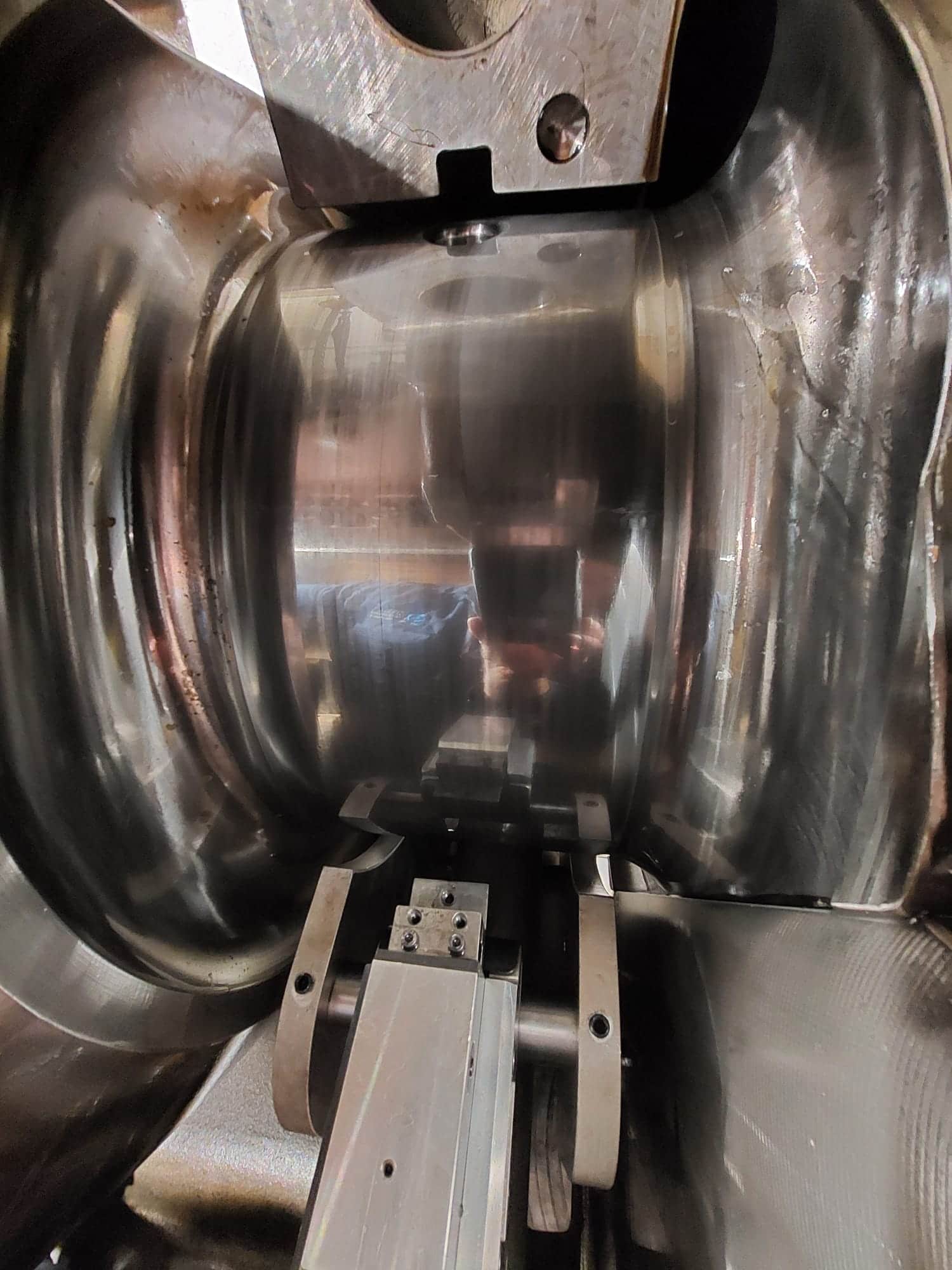
In-situ crankpin grinding is precision work. The finished journal diameter must be within the tolerance band specified by the engine manufacturer for the relevant undersize, and the surface finish must meet the Ra value required for the bearing type being fitted. These are not broad tolerances.
Roundness on finished crankpins is typically held within 0.005mm. Cylindricity (the uniformity of the journal profile along its length) is held within similar limits. Surface finish is measured and confirmed before the bearing is offered up, not assumed from the grinding process.
Royce engineers carry calibrated instrumentation to site as standard. Journal measurements are taken before and after the work, and the results are documented as part of the job record. If the finished measurement falls outside the specified tolerance, the work continues until it does not.
These standards are not compromised by the in-situ environment. The equipment is designed to achieve workshop-equivalent results in the field, and the engineers using it are experienced enough to manage the variables — vibration, temperature change, access constraints — that a fixed workshop environment does not present.
What Realistic Turnaround Looks Like
Turnaround time for in-situ crankpin repair depends on three variables: the number of throws affected, the degree of damage and whether heat treatment is required beforehand, and the accessibility of the engine.
For a single crankpin on a medium marine diesel engine with surface scoring but no work hardening, assessment, grinding, and sign-off is typically achievable within two to three days from mobilisation. For a full crankshaft grind covering multiple throws on a larger engine with some work-hardened journals requiring crankpin annealing, the programme extends to five to seven days.
These figures assume the correct equipment and personnel are mobilised to site, the bearing shells are available or can be sourced within the programme window, and no unexpected findings, such as cracking identified during the assessment, change the scope of work.
Mobilisation: Royce operates a 24/7 emergency response service. Initial mobilisation can be arranged within hours of a confirmed requirement. The programme duration clock starts from when the engineers arrive on site and have confirmed access, not from first contact.
Frequently Asked Questions
Can in-situ crankpin repair be carried out on any engine type?
The vast majority of marine, power generation, and heavy industrial diesel engines can be worked on in-situ. The limiting factors are journal undersize history, the nature of the damage, and physical access around the crankshaft throws. Engine type is rarely the limiting factor — access geometry and damage extent are far more relevant variables. Royce has carried out in-situ crankpin work on engines from the full range of major marine and industrial manufacturers.
How do I know if my crankpin is within the undersize limit?
The engine manufacturer’s service manual will specify the minimum journal diameter for each undersize stage. Current journal diameter is established by measurement with calibrated micrometres. If you do not have the service data or the measurement equipment on site, Royce engineers can establish both during the assessment phase. Do not assume a journal is within limits without measurement.
What is crankpin annealing and when is it needed?
Crankpin annealing is a localised heat treatment process applied to a journal that has become work-hardened, typically because of a bearing seizure or sustained running with insufficient lubrication. Work-hardened material does not respond correctly to grinding and can produce a poor surface finish that shortens bearing life. Annealing restores the surface hardness profile to within the range that allows the grinding process to produce the specified finish. It adds time to the programme but is necessary when the condition is present.
What happens if cracking is found during the assessment?
If cracking is identified during the assessment, the scope of work changes. Surface cracking in the journal area requires magnetic particle inspection to establish the extent and depth. Cracks in the fillet radius or web are a more serious finding and typically indicate that the crankshaft requires workshop assessment and, in most cases, replacement. Royce will provide a clear summary of findings and options so that you can make an informed decision on the most appropriate course of action.
Can Royce carry out the bearing fitting as part of the same programme?
No. Royce engineers typically manage the full scope of crankpin repair work, including measurement, grinding, and sign-off. If you are sourcing replacement bearing shells separately, coordinate the delivery to coincide with the grinding programme to avoid extending the downtime window unnecessarily.
Getting to the Right Answer Quickly
The question of whether in-situ crankshaft or crankpin repair is viable cannot be answered definitively without a physical assessment. What this article can do is give you a clear sense of whether the indicators are pointing toward in-situ viability or not, so that you are asking the right questions when you call.
If the journal is within undersize limits, the damage is on the surface, and physical access is workable, the probability of in-situ repair being the right route is high. If any of those conditions is in doubt, the assessment will establish the facts quickly.
Royce Onsite Machining provides 24/7 emergency response for crankshaft and crankpin repair across the UK and internationally. Call +44 (0) 1494 312888, email info@royceonsite.com, or contact us through https://royceonsitemachining.com/contact/.