

When a critical component fails, the first instinct is often to remove it, strip it from the assembly, send it to a workshop, have it machined properly, and refit it. It feels like the safe, thorough option. In a great many cases on large industrial plant, it is the slow and expensive one, and it is not always necessary.
Removal is rarely a single step. It is disassembly, rigging, transport, a place in someone else’s workshop queue, reinstallation, realignment, and recommissioning, each carrying its own time, cost, and risk.
Before any of that is set in motion, it is worth asking a simpler question: does the component need to leave its position at all? For a large share of the breakdowns and planned repairs that Royce Onsite Machining attends, the answer is no. The work can be brought to the component via in-situ machining, and the assembly never comes apart.
This article looks at when removal is genuinely required, when machining in place is the better decision, and how to tell the difference quickly when downtime is already costing money.
The Hidden Cost of Taking a Component Out
On heavy plant, removing a component is almost never the quick part of a repair. A worn main bearing bore, a damaged crankpin, or a scored journal might take a day to machine, but the surrounding work can add a week or more. Consider what removal typically involves before any metal is cut:
- Disassembly of the surrounding structure, often more extensive than the fault itself warrants.
- Cranage, lifting, and rigging for components that may weigh several tonnes.
- Transport to a workshop, with the handling risk and insurance exposure that travel introduces.
- A wait for capacity in a third party’s schedule, entirely outside your control.
- Reinstallation, then realignment and recommissioning needed to bring the system back to a known-good state.
Each stage is a point at which the timeline can slip. When a vessel is held in dry dock, or a plant is in an unplanned shutdown, the cost of those extra days usually dwarfs the cost of the machining itself. That is the real comparison to make, not workshop rate against on-site rate, but total downtime against total downtime.
What In-Situ Machining Means in Practice
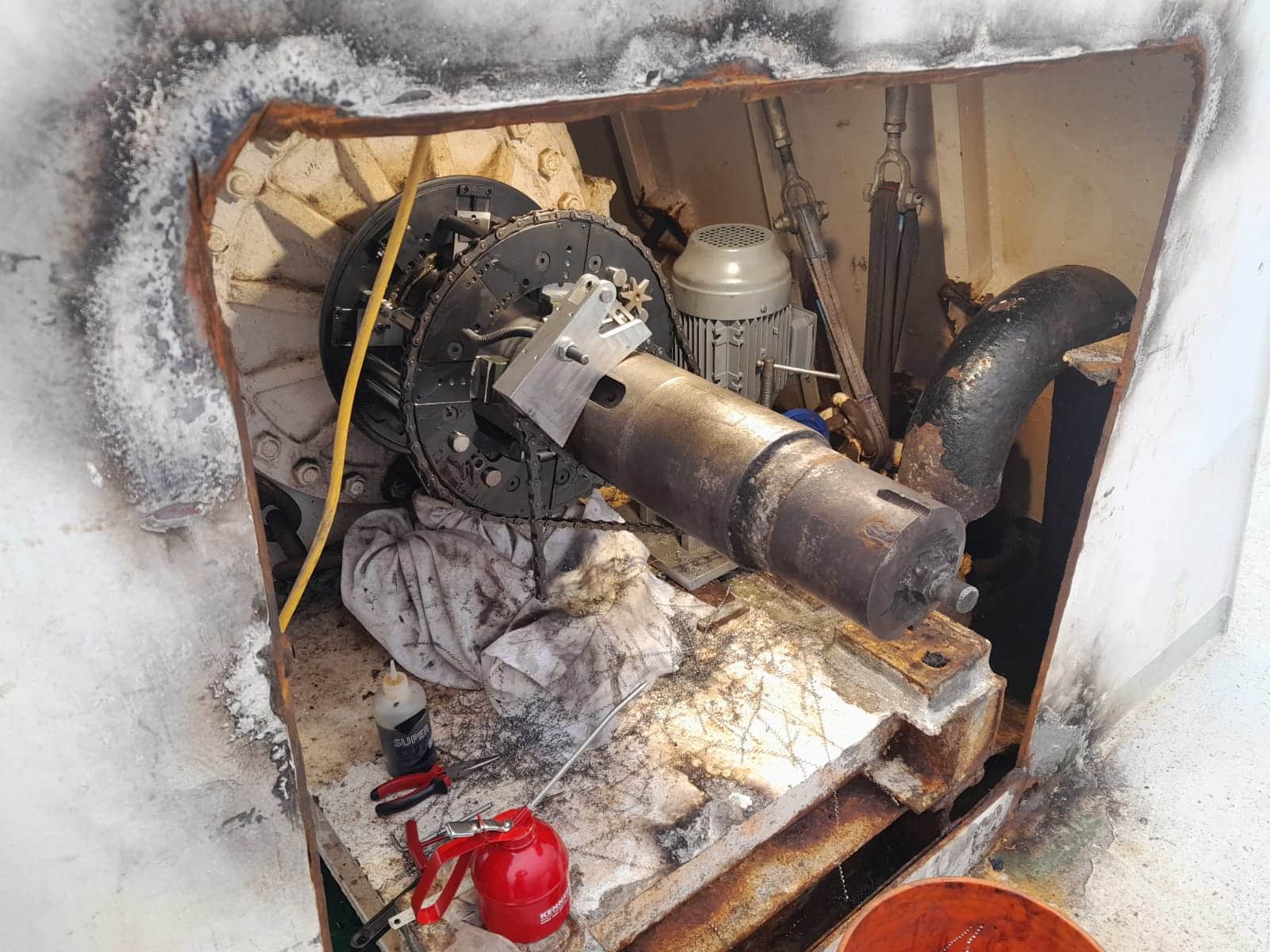
In-situ machining is the approach of machining a component while it stays in its installed position. The component is not removed or stripped from the assembly. Instead, portable machining equipment is rigged directly to the workpiece, and the cut is taken in place, using the surrounding structure as the reference.
It is the standard method for large, heavy, or deeply integrated components precisely because removal would introduce more risk and delay than the repair itself. The work is done where the component sits, and the machine, rather than the component, does the travelling.
When Removal Is Genuinely the Right Call
In-situ is not always the answer, and a specialist worth calling will tell you so. There are cases where taking the component out is the sounder decision:
- Smaller components that are straightforward to extract and handle, where transport and workshop setup are trivial.
- Failure modes that require a process not practical to perform on-site, such as full crankshaft regrinding, which is beyond the scope of portable equipment.
- Situations where access to the component in place is genuinely impossible or unsafe.
- Repairs requiring controlled environments or processes that belong in a fixed facility.
Even then, the choice is not always all-or-nothing. Some work that involves removal still benefits from staying on site rather than travelling to a remote workshop. And processes such as heat treatment and crankpin annealing can be carried out on-site as part of an in-situ repair, where applicable.
When Machining in Place Is the Better Decision
For the equipment Royce is most often called to, the balance falls firmly towards working in situ. The decision tends to be clear when the component is large, alignment-sensitive, or impractical to move within the operational window:
- Diesel engine bedplates, where line boring restores the main bearing housings without lifting the engine from the vessel or station.
- Crankshafts, repaired through on-site crankpin machining and journal work with the shaft left in the engine.
- Pipework and pressure joints, where flange facing is completed without dismantling connections that cannot easily be rebuilt.
- Cracked cast iron housings and structural castings, repaired by metal stitching in place and without the heat distortion that welding can cause.
- Propulsion shafting, addressed through tailshaft repair with the shaft in the vessel.
The Alignment Argument: The Strongest Reason Not to Remove
There is one technical advantage to working in place that goes well beyond saving disassembly time, and it is the point that most often settles the decision on precision-critical machinery.
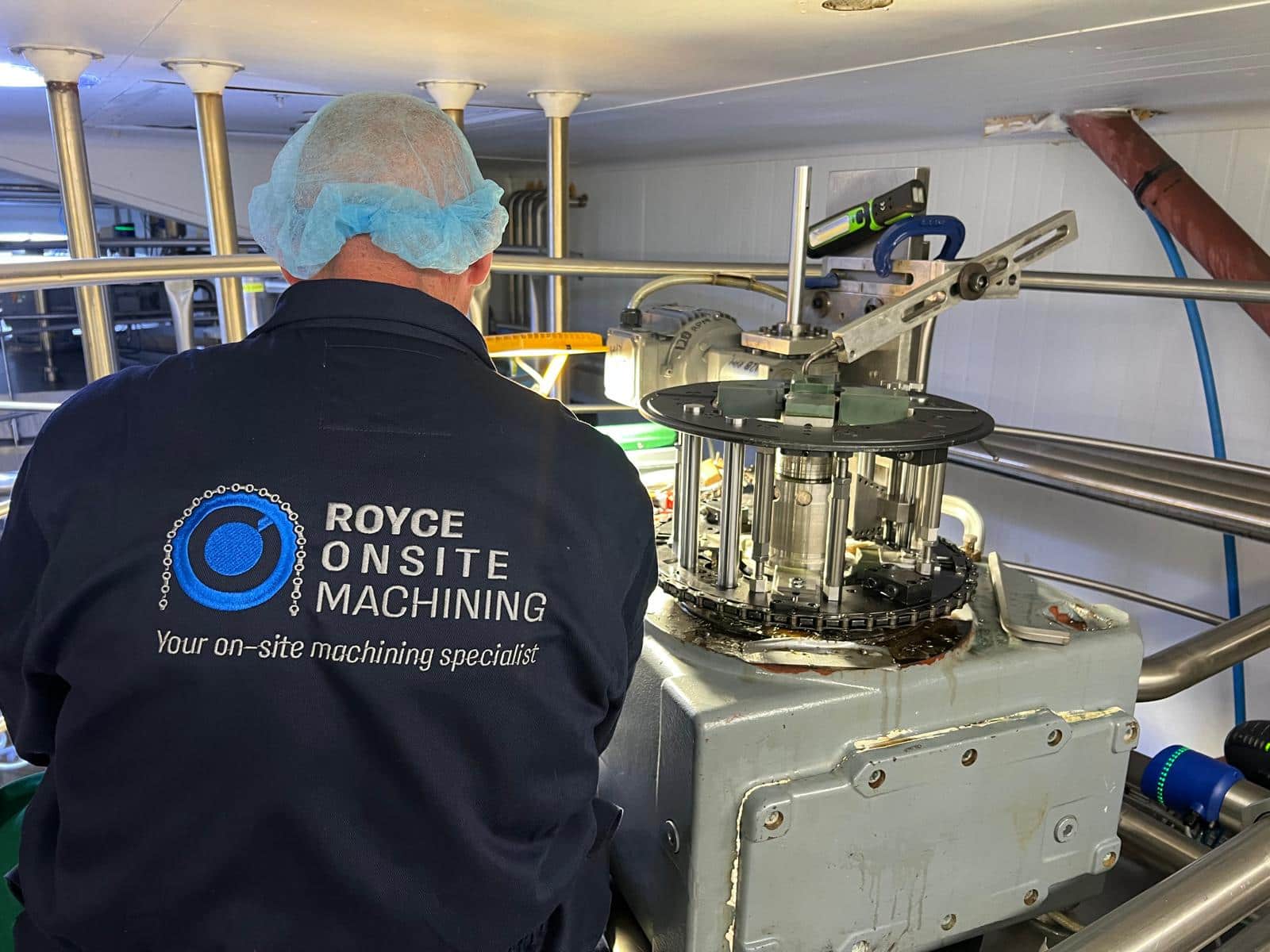
When a component is removed and later reinstalled, its alignment relative to the surrounding system needs to be reestablished. On a long bearing line or a large engine, that reintroduces a variable which simply does not exist when the work is done in position. A component machined within its own operating context is already referenced to the structure it runs in. For on-site line boring, crankshaft work, and bearing journal repairs, in-situ machining eliminates the risk of misalignment at reinstallation because nothing is ever taken out of line in the first place.
Can In-Situ Match Workshop Tolerances?
This is the question that makes engineers hesitate, and it is a fair one. The answer, when the work is carried out by experienced engineers using the correct portable equipment, is yes. Modern portable machining tools achieve tolerances comparable to those of a fixed workshop machine. The decisive variable is not the location or even the equipment, but the expertise of the team rigging and operating it. Royce has been delivering on-site and in-situ machining for over 50 years, and that experience is what allows the tolerances people expect from a workshop to be held on the job site.
A Simple Way to Decide
If you are weighing up removal against working in place, the following gives a quick read on which way the decision is likely to fall. The final judgement should always be made by a specialist who can assess the specific component and access it, but this is a useful starting point.
| Lean towards removal if | Lean towards in-situ if |
|---|---|
|
|
Examples From the Field
The principle is easiest to see in real repairs. In each of the following, removal was either impractical or simply unnecessary, and the work was completed with the component left in place:
Crankpin machining on a marine engine: The engine stays in the vessel. Portable equipment is rigged to the crankshaft, and the crankpins are machined to tolerance without the shaft ever leaving the engine.
Bedplate line boring in a power station: Worn main bearing housings are restored in place across the bearing line, recovering alignment that removal and refitting would have put at risk.
Flange facing during a refinery shutdown: With shutdown windows tightly scheduled and costly to extend, flanges are refaced in position so the work fits inside the planned outage rather than lengthening it.
Crack repair on a cast iron casting: Metal stitching restores a cracked block or housing cold and in situ, avoiding the risk of distortion that comes with applying heat to a large casting.
Frequently Asked Questions
Is in-situ machining as accurate as workshop machining?
Yes, when carried out by experienced engineers using the correct portable equipment. The tolerances achievable on site are comparable to those of a fixed workshop machine. The key variable is the team’s expertise rather than the location of the work.
Are there repairs that genuinely require removal?
Some, yes. Smaller components that are easy to handle, or repairs that require a process that can only be performed in a fixed facility, may be better suited for removal. The honest answer for any specific component is best reached in conversation with a specialist.
How quickly can an on-site team mobilise?
Royce Onsite Machining operates a 24/7 emergency response service and mobilises rapidly to locations across the UK and worldwide. The exact timeline depends on the site and the equipment required, but fast emergency response is central to what the team is set up to deliver.
Does machining in place really avoid alignment problems?
It does. Because the component is never removed, its alignment relative to the surrounding system is preserved throughout. There is no reinstallation step in which misalignment could be introduced.
What industries does Royce work in?
The team works across marine and shipbuilding, power generation, oil and gas, petrochemical, mining and heavy industry, and infrastructure and construction, wherever large critical equipment makes downtime expensive and conventional repair routes slow.
Before You Commit to Removal
Removing a failed component can feel like the responsible choice, but in a large industrial plant, it is often the slowest and most expensive route and is frequently avoidable. The questions that matter are whether the repair can be carried out where the component sits, what tolerances are needed, how fast the work must be done, and whether the team you are calling has the experience to manage all of that under real operating conditions.
Before you commit to stripping anything out, it is worth having a brief conversation to determine whether in-situ machining is viable. In many cases, it is, and the decision can be settled in the first call.
Royce Onsite Machining has over 50 years’ experience delivering on-site and in-situ machining across the UK and internationally, available 24 hours a day, seven days a week. Call +44 (0) 1494 312888, email info@royceonsite.com, or contact our team.